
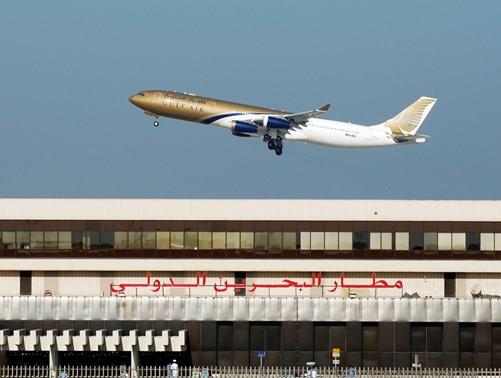
Freedom of Movement: A Fundamental Right
Freedom of movement is a fundamental right guaranteed under international conventions and can only be restricted to the narrowest limits and in accordance with the law. However, former political prisoners in Bahrain continue to face obstacles after their release, whether they have served their full sentences or benefited from a royal pardon.
In recent months, several human rights organizations have documented cases of political prisoners who completed their sentences or were granted a royal pardon and were allowed to travel outside Bahrain. Yet, they faced obstacles upon arrival in some Gulf or Arab countries, including being turned back at airports or denied entry without explanation.
These practices are not limited to a single individual but reflect an undeclared policy that restricts freedom of movement even after the sentence has ended, effectively imposing an additional punishment not stipulated by law.
The Latest Case
Recently, a former prisoner was returned from a Gulf country despite arriving officially with a Bahraini passport, bringing the issue of freedom of movement for this group of citizens back into focus.
Gulf Context – “Single Point” Project
The “Single Point” project is expected to be implemented soon among Gulf countries, allowing Bahraini citizens to complete entry procedures to another state directly from Bahrain, without needing to register again upon arrival.
However, the crucial question remains:
-
Will this system help remove arbitrary restrictions on the movement of former political prisoners?
-
Or will names on the “joint security lists” continue to pose a barrier to their natural right to freedom of movement?
Human Rights Perspective
-
Preventing former prisoners from traveling despite the completion of their sentences contradicts Article 12 of the International Covenant on Civil and Political Rights, which guarantees everyone the right to leave any country, including their own.
-
The continuation of these restrictions reflects a pattern of extended punishment, where the penalty does not end with the sentence but continues in the form of travel bans or restrictions on civil rights.
Conclusion and Recommendations
-
Human rights organizations call for guaranteeing the right of former political prisoners to freedom of movement and travel without restrictions.
-
Gulf countries are urged to review their security lists to comply with international human rights standards.
-
The impact of the “Single Point” project on former prisoners must be clarified to ensure it is not used as a pretext for expanding security bans but as a step toward enhancing rights.