
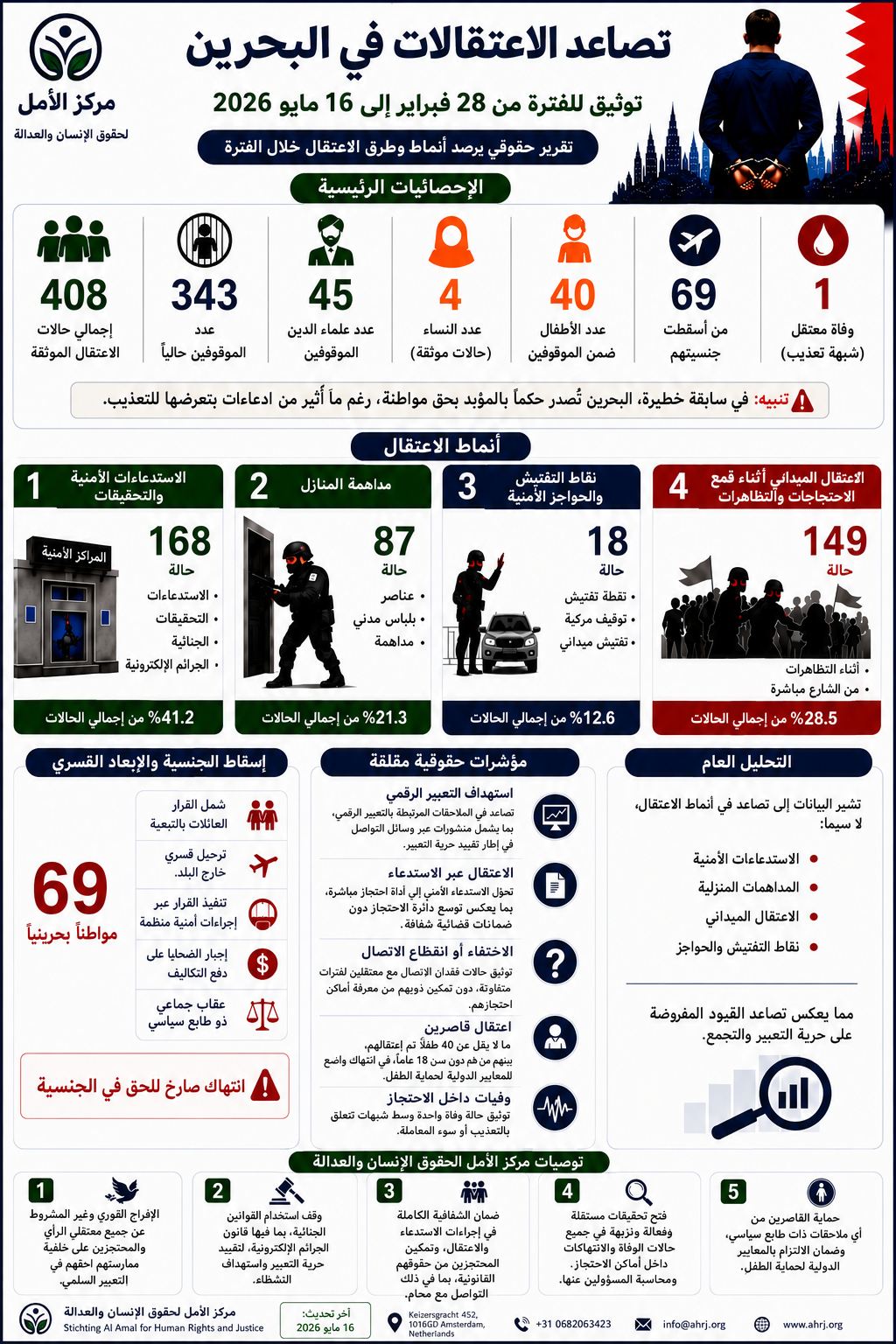
Al Amal Center for Human Rights and Justice has issued a human rights report documenting patterns of arrest and developments related to public freedoms in Bahrain during the period from 28 February to 16 May 2026, based on information, testimonies, and field monitoring and documentation efforts.
The report presents indicators related to the number of detainees, methods of arrest used, as well as issues linked to citizenship revocation and forced deportation, with a focus on the groups most affected, including children, women, and religious scholars.
According to the Center’s documentation, the total number of documented arrest cases reached 408, including 40 children, 4 women, and 45 religious scholars. The report also documented the death of one detainee amid human rights calls for an independent and transparent investigation into the circumstances surrounding the death.
The Center further documented the issuance of judicial rulings against 64 individuals during the reporting period, including a number of Asian nationals, in cases linked to the security context and recent developments.
The report also examines patterns of arrest documented during the period, including security summonses, house raids, checkpoints and security barriers, as well as field arrests associated with protests and demonstrations.
In another development, the report documented the revocation of citizenship from 69 Bahraini citizens, highlighting the humanitarian and legal consequences resulting from these measures, particularly regarding the right to nationality and family stability.
Al Amal Center for Human Rights and Justice stresses the importance of adhering to international human rights standards, including fair trial guarantees, protection of freedom of expression, children’s rights, and the right of individuals to communicate with their families and legal counsel.
The Center also calls for greater transparency in detention and investigation procedures and for the opening of channels for human rights dialogue in a manner that contributes to the protection of fundamental rights and the promotion of social stability.